
Camping in Rhode Island: Coast, Trees, and the Kind of Quiet You Actually Need
Burlingame State Park in Charlestown is one of the most consistently recommended campgrounds in the state, and for good reason. It sits in the southwestern corner of Rhode Island, close enough to the coast that you can feel it, and it shows up on Hipcamp's top-rated list alongside a handful of private sites. Cabin rentals are available nearby for those who want a roof and a bed without giving up the trees and fresh air.
Fishermen's Memorial State Park and Campground in Narragansett puts you about a mile from Point Judith, one of the most storied fishing spots on the New England coast. It's a top-rated Hipcamp pick and draws folks who want coastal access with the structure of a state park. You're close to the water, close to the village, and still sleeping outside.
Over in the northwest, the George Washington Memorial Camping Area offers 45 treed, well-spaced gravel sites that work for tents, trailers, and RVs. There are no electrical hookups, but water is available on-site. The spacing between sites matters more than people expect, and this one has it. It's a quieter, more forested experience than the coastal parks, and it draws campers who want to actually hear the birds in the morning.
On the private side, Hipcamp ranks Milk Thistle Farm first in the state, Harlow Hill second, and 8 Acres Homestead third. These kinds of farm and homestead sites have become popular with women traveling in small groups who want something more personal than a state campground. They tend to book fast.
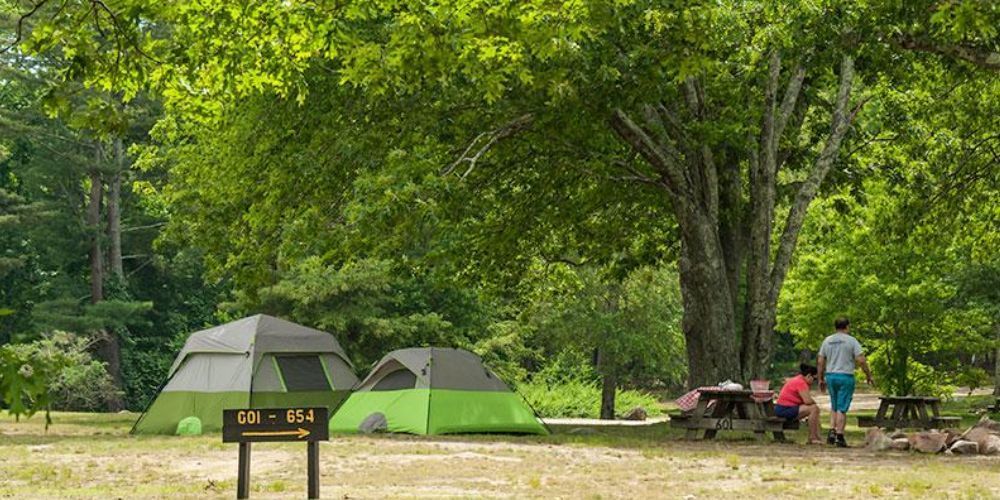
Where Rhode Island Campers Actually Go
Rhode Island has two federal wildlife refuges where camping and activities can be reserved through Recreation.gov: Sachuest Point National Wildlife Refuge and Block Island National Wildlife Refuge. Both require advance reservations and permits booked through that platform. Don't wait until the week before your trip to check availability.
Block Island is a ferry ride from the mainland and feels like a genuinely different world. It's known for migratory bird watching and wide open landscapes that don't look like the rest of New England. Sachuest Point, near Middletown, sits on a peninsula surrounded by water on three sides and has long been a draw for birders and coastal walkers. Both are managed by the U.S. Fish and Wildlife Service, so Recreation.gov is the only official booking channel.
If you're new to federal refuge camping, the process is simpler than it sounds. Create an account on Recreation.gov, search by refuge name, and follow the reservation steps. Permits and payment are handled through the same platform. Print your confirmation or keep it on your phone.
The Ocean State's Camping Identity and a Bit of History
Rhode Island has been called the Ocean State since it adopted the nickname to reflect its relationship with Narragansett Bay and the Atlantic. That identity runs through its camping culture. Coastal access, salt air, and proximity to historic fishing communities shape what camping here actually feels like. You're rarely more than an hour from water, no matter where you pitch a tent.
Fishermen's Memorial State Park carries that history in its name. Point Judith, less than a mile away, has been a working fishing port for generations, and the surrounding area reflects that maritime heritage. Camping near it connects you to a place that has meant something to Rhode Island communities for a long time. That context makes the sunsets feel earned.
The official Visit Rhode Island tourism website offers a printable PDF camping guide for the state, which is worth downloading before your trip. It gives a solid overview of campground options and helps you compare sites quickly. It's a practical first step for any planning session.
Permits, Residency Rates, and What to Know Before You Book
Rhode Island State Parks have a formal camping policy worth reading before you reserve. If you book at the resident rate but can't show proof of residency when you arrive, you'll be charged the non-resident rate on the spot. It's an easy thing to overlook and an annoying thing to pay for. Bring your ID and any documentation that confirms your Rhode Island address if you're booking as a resident.
The full camping policy is available as a downloadable PDF from the Rhode Island Department of Environmental Management parks website at riparks.ri.gov. Read it once. It covers rules that apply across all state park campgrounds, not just one location. Knowing the basics before you arrive makes check-in smoother and keeps the first evening relaxed.
For federal sites, Recreation.gov handles all reservations for both Sachuest Point and Block Island National Wildlife Refuges. State park reservations are handled separately through the Rhode Island state parks system. Keep both bookmarked if you're comparing options.
Gear Tips for Camping in Rhode Island
Rhode Island's coastal humidity is the thing most first-time campers underestimate. Even in summer, mornings near the water are damp. A quality sleeping bag liner and a tent with good ventilation make a real difference. Condensation on the inside of a tent by 6 a.m. is a Rhode Island camping rite of passage you can plan around.
If you're camping at George Washington Memorial, where there are no electrical hookups, a portable battery pack or solar charger is worth bringing. You don't need much power, but a charged phone and a headlamp with fresh batteries handle most situations. The sites are treed and shaded, so solar charging works best in open clearings rather than at your campsite.
For coastal sites like Fishermen's Memorial, wind is a factor. Stakes that hold in sandy or mixed soil, a rain fly that cinches tight, and a lightweight windbreaker you can grab at 5 a.m. are all worth packing. Salt air is also hard on gear over time, so rinse anything metal after a coastal trip. A small dry bag keeps electronics and documents safe on ferry rides to Block Island.
Essential Gear for Rhode Island

Carhartt Soft-Shell Camping Cooler Lunch Bag, Brown
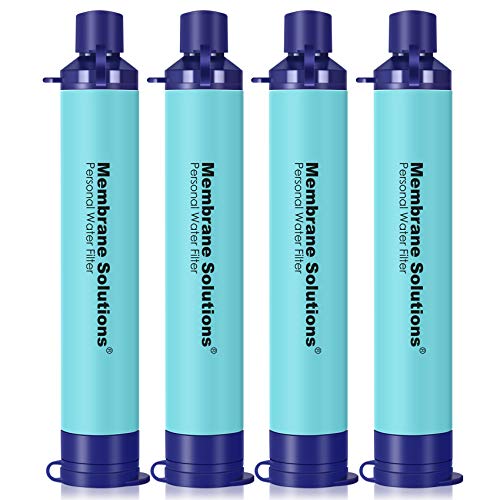
Membrane Solutions Water Filter Straw, 4 Pack
List of Services
-
Camping in Rhode Island Plan your Rhode Island camping trip with top sites, gear tips, and permit info for women and families. Start planning today.Camping in Rhode Island
-
Cycling in Rhode Island Discover Rhode Island's best cycling routes for women, beginners, and families. Find top trails, gear tips, and guided tours. Start planning your ride today.Cycling in Rhode Island
-
Hiking in Rhode Island Find the best hiking trails in Rhode Island for beginners and families. Top spots, gear tips, and when to go. Start planning your trip today.Hiking in Rhode Island
-
Kayaking in Rhode Island Find Rhode Island's best kayaking spots for women, beginners, and families. Top routes, gear tips, and when to go. Start planning your paddle trip today.Kayaking in Rhode Island