
Camping in Pennsylvania: Where to Go, What to Bring, and Why You'll Keep Coming Back
Allegheny National Forest draws more Pennsylvania campers than almost anywhere else in the state. It has 17 campgrounds bookable through Recreation.gov, and AllTrails users have added trail maps, photos, and detailed reviews that make planning from home a lot easier. The forest sits in northwest Pennsylvania and gives you the kind of wooded, unhurried experience that makes you want to stay an extra night.
Red Bridge Campground is one of the standout spots inside the national forest. It sits on the eastern shore of the Kinzua Arm of the Allegheny Reservoir, which means you're waking up to calm water and tree-lined banks. Families come back here year after year, and it's easy to see why. It's peaceful without being remote to the point of inconvenience.
Seven Points Campground at Raystown Lake is another one worth knowing about. It has six camping loops and over 260 campsites, which means it accommodates tents, RVs, and trailers without feeling like anyone got the short end. Raystown is one of Pennsylvania's largest lakes, and the campground sits right on the water. You can go from your tent to a kayak in minutes.
French Creek State Park rounds out the short list for good reason. It's a well-run park with a visitor center, restrooms, and picnic areas, and it attracts campers who want facilities without sacrificing the feeling of being in the woods. No admission fee gets charged at Pennsylvania state parks, though camping fees do apply, so it's worth checking rates before you book.
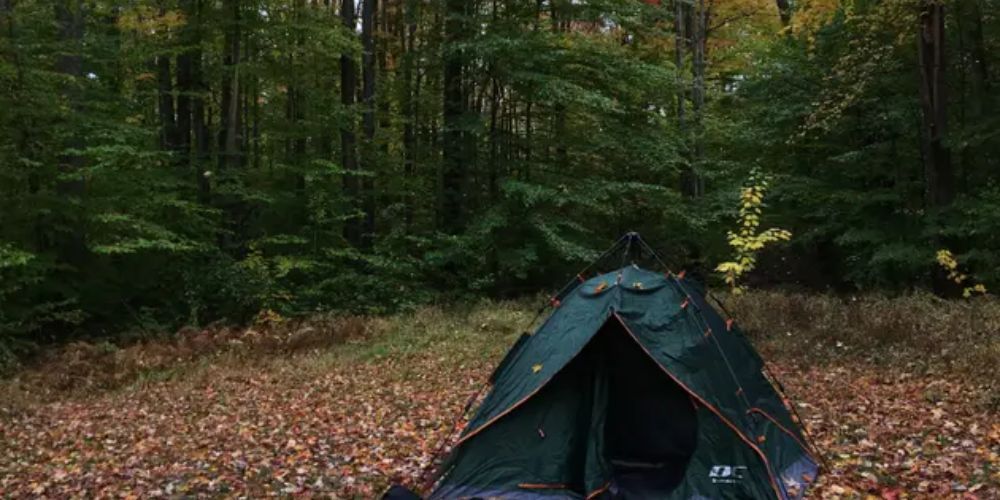
Where Pennsylvania Campers Actually Go
If you're pulling a trailer or driving an RV, three state parks come up again and again among Pennsylvania campers: Promised Land State Park, Hickory Run State Park, and Codorus State Park. All three have earned spots on the short list of favorite RV camping destinations in the state. Each one has a different feel, from the wooded ridges at Hickory Run to the open reservoir views at Codorus.
Promised Land is up in the Pocono Mountains, and the name has roots in the Shaker community that once farmed this land in the 1800s. That history gives the place a certain weight. You're camping on ground that meant something to people who came before you. The lakes there are clear and quiet, and mornings tend to feel especially still.
Hickory Run is known for its Boulder Field, a National Natural Landmark left behind by glaciers thousands of years ago. It's not something you see at most campgrounds. Walking out to that field early in the morning, before other folks are up, is the kind of thing you remember.
Codorus State Park sits in York County and wraps around Lake Marburg. The camping there puts you close to the water, and the park is big enough that it never feels overcrowded even on a holiday weekend.
Water Access and Lakeside Sites
Pennsylvania's best camping is often its water-access camping. Red Bridge Campground on the Allegheny Reservoir gives you shoreline views from a forested site. The water there is calm most mornings, glassy before the wind picks up, and if you're traveling with kids or just want a low-key day, sitting by that water is enough.
Seven Points Campground at Raystown Lake puts you on one of Pennsylvania's most expansive lakes. The six loops spread across the campground mean you can often find a site that feels private even when the campground is full. Tent sites and RV sites share the same access to the lake, so you're not choosing between convenience and scenery.
French Creek State Park has two lakes, Hopewell Lake and Scotts Run Lake, both accessible from the campground. Fishing, swimming, and paddling are all available. The water stays clear through most of the summer season, and the park's facilities make it easy to spend a full day there without needing to pack out and drive somewhere else.
Trails Worth Hiking from Camp
Camping and hiking go together in Pennsylvania in a way that's hard to separate. AllTrails has curated a list of the 10 best camping trails in the state, each with driving directions, maps, and user reviews. That resource alone can turn a vague trip idea into a real itinerary.
State Game Lands Number 80 is one spot that AllTrails users specifically highlight for camping-adjacent hiking. The PA 183 South to Kimmel Lookout trail via the Appalachian Trail is the recommended route there. The Appalachian Trail runs more than 200 miles through Pennsylvania, and sections of it pass through or near several campgrounds, which means you can stretch your legs on one of the most iconic footpaths in the country without going far from your tent.
Allegheny National Forest also has trails mapped on AllTrails with the kind of detail that helps you gauge difficulty before you go. If you're new to pairing a hike with an overnight, starting here gives you good information and enough variety to find something that fits your pace.
Cultural and Historic Connections
Pennsylvania's campgrounds sit in a state with a long, layered history, and some of that history is hard to miss. The Allegheny National Forest land includes parts of the Allegheny Reservoir, which was created in the 1960s by the Kinzua Dam. Before the dam was built, the Kinzua Valley was home to the Seneca Nation, and the flooding of that land is still a significant chapter in Pennsylvania history. Visiting the Kinzua Dam area, near Red Bridge Campground, carries that context with it.
Promised Land State Park's name traces back to the Shakers, a religious community that settled this part of the Poconos in the 1800s and farmed the land they called their promised land. The park has held that name ever since. Camping there connects you, in a small way, to a community that believed deeply in simplicity and the value of working land.
Hopewell Furnace National Historic Site sits just outside French Creek State Park. It's a well-preserved iron furnace from the 18th and 19th centuries, and it tells the story of early American industry in a region that helped fuel the country's growth. It's worth building an hour into your trip to walk through it.
Essential Gear for Pennsylvania
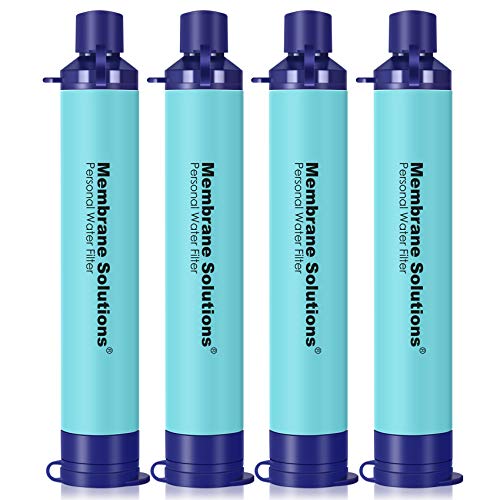
Membrane Solutions Personal Water Filter Straw, 4-Pack

Carhartt Soft Shell Camping Cooler Lunch Bag
Gear Tips for Camping in Pennsylvania
Pennsylvania camping happens across four real seasons, and the state's terrain runs from flat farmland to steep, rocky ridgelines. What you pack matters more here than in a state with a milder, more predictable climate. Spring and fall bring cool nights even when the days are warm, so a sleeping bag rated for temperatures lower than you expect is worth bringing.
The forest floors in places like Allegheny National Forest and Hickory Run are rocky and rooted. Sturdy footwear with ankle support is the right call, especially if you plan to day-hike from your campsite. Sandals are fine for around camp, but don't count on them for the trail.
A good rain layer is non-negotiable in Pennsylvania. Summer afternoons can bring fast storms, and staying dry at camp is the difference between a good trip and a miserable one. A lightweight, packable rain jacket takes up almost no space and earns its weight every single time. If you're tent camping, a footprint or ground cloth under your tent adds real protection against Pennsylvania's damp, leaf-covered ground.
For anyone newer to camping, a published guide called Camping Pennsylvania covers nearly 100 public campgrounds with detailed information on locations, facilities, fees, and wildlife tips. It's a practical reference that takes a lot of the guesswork out of the first few trips.
List of Services
-
Camping in Pennsylvania Find Pennsylvania's best campgrounds for women, beginners, and families. Top sites, gear tips, and planning advice. Start your trip here.Camping in Pennsylvania
-
Cycling in Pennsylvania Discover Pennsylvania's best cycling trails, rail paths, and scenic routes for women and families. Find gear tips and top spots. Start planning your ride.Cycling in Pennsylvania
-
Hiking in Pennsylvania Discover Pennsylvania's best hiking trails for women, beginners, and families. Find top spots, gear tips, and guided options. Start planning your trip today.Hiking in Pennsylvania
-
Kayaking in Pennsylvania Find Pennsylvania's best kayaking spots for women, beginners, and families. Top lakes, rivers, gear tips, and when to go. Start planning your trip today.Kayaking in Pennsylvania