
Montana Trails Worth Every Step: A Hiking Guide for Women Ready to Go
The Natural Bridges Trail is a strong starting point if you're new to Montana hiking or just want a shorter day out. It's a little over a mile to reach the natural bridges, rated easy to moderate, and the payoff is a geological formation that earns the trip on its own. It's the kind of hike you can do with a kid, a friend, or by yourself on a quiet morning.
Drinking Horse Mountain Trail shows up on AllTrails lists for good reason. It's a popular fall trail that's accessible without demanding a lot of your knees or your fitness baseline. If you're planning a trip to the Bozeman area, it's worth working into your itinerary alongside other errands or stops.
Lava Lake Trail is another fall favorite on AllTrails, offering a manageable distance with a lake at the end. There's something about hiking to water that makes the effort feel worthwhile in a way that summit hikes sometimes don't. You arrive somewhere calm and clear, and you can sit with that for a while before heading back.
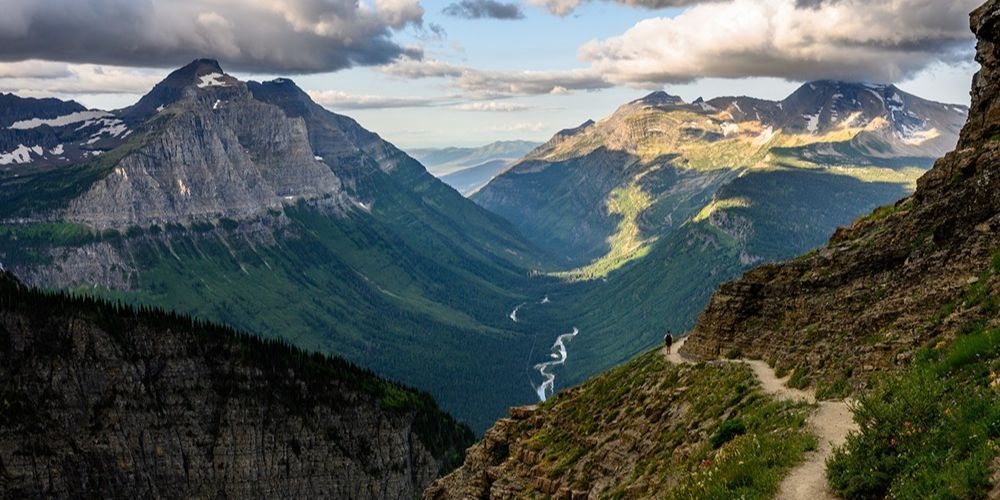
Best Trails for Beginners and Casual Day Hikers
Avalanche Lake in Glacier National Park is one of the most talked-about trails in the state, and it earns the attention. The destination is a lake fed by waterfalls coming off the surrounding cliffs, and on a still morning the water can look like glass. It's listed as a popular fall hike, when the crowds thin and the light changes.
Hidden Lake Overlook is another Glacier trail worth knowing. You get sweeping views of a high alpine lake from the overlook, and the fall timing brings the possibility of wildlife sightings as animals move before winter. The trail starts at Logan Pass, so plan your parking accordingly, especially if you're going in peak season.
Grinnell Glacier Trail is the one to do if you want a hike that stays with you. The glacier itself is a living reminder of how much these landscapes are changing, and standing that close to ancient ice is an experience that's hard to put into words. It's a longer, more demanding trail, so pair it with a good night's sleep and an early start.
A Bigger Challenge: Garnet Mountain Lookout Trail
For those ready to push a little further, the Garnet Mountain Lookout Trail in Custer Gallatin National Forest covers 4.5 miles and gains 2,800 feet in elevation. That elevation gain is real, and you'll feel it. But the destination is a historic fire lookout structure that's accessible by foot in summer, and the views from the top justify the climb.
Fire lookouts have a particular romance to them. The people who staffed these structures lived up there for entire seasons, scanning the horizon for smoke. Coming up on foot, you get a small sense of what that solitude felt like. It's one of those hikes where the history is built into the landscape itself.
This trail is a summer hike. Build your trip around that window and give yourself enough time to take it at a pace you actually enjoy.
When to Go Hiking in Montana
Summer opens up the high-elevation trails, including the Garnet Mountain Lookout Trail and the Glacier National Park routes. July through early September is when most of Montana's alpine hiking is accessible, and the long daylight hours give you flexibility in your timing.
Fall is genuinely one of the best times to be on a Montana trail. Avalanche Lake, Hidden Lake Overlook, Grinnell Glacier Trail, Lava Lake Trail, and Drinking Horse Mountain Trail are all listed as popular fall destinations. The crowds ease up, the temperatures cool down, and the color makes everything look a little different.
One trail with specific timing to know: Ear Mountain Trail is open from July 1 through December 14. The seasonal closure exists specifically to protect wildlife, so those dates are fixed. Plan around them, and you'll be in good shape.
Wildlife and the Land That Shapes These Trails
The Ear Mountain Trail closure tells you something important about Montana hiking: the wildlife here is not incidental. These closures are put in place because the animals need that space during certain seasons, and the state takes that seriously. When you're out on the trail, you're moving through their territory.
Glacier National Park trails like Grinnell Glacier and Hidden Lake Overlook run through some of the most wildlife-rich terrain in the lower 48. Carry bear spray, know how to use it, and make noise on the trail. That's not fear-mongering. It's just how you hike responsibly in Montana.
The payoff for all that attention is that Montana hiking can feel genuinely wild in a way that trails closer to cities rarely do. You might see something that stops you in your tracks. That's part of what makes the planning worth it.
Essential Gear for Montana

Osprey Ultralight Collapsible Stuff Pack 18L
Cultural and Historic Connections Along Montana's Trails
Travelers' Rest State Park in southwest Montana sits directly along the Lewis and Clark Trail, near Lolo Pass. Lewis and Clark camped here, and the ground you're walking on carries that history in a way that's easy to feel when you slow down and think about it. The park offers hiking and biking, and the Lewis and Clark connection gives it a layer of meaning that a lot of trails simply don't have.
In central Montana, the Great Falls area includes a National Historic Landmark marking the Lewis and Clark portage site. Four of the falls can be seen via walkways and scenic overlooks near the city. It's an accessible experience that connects you to a journey that shaped how the American West was mapped.
Southwest Montana is also home to Virginia City, an Old West ghost town that's in the same region as several state park hiking destinations, including Bannack State Park and Fort Owen State Park. If you're building a multi-day trip around hiking in that area, an afternoon in Virginia City makes the whole thing feel like more than a workout. It's a window into a Montana that existed long before the trail maps.
Guided Hiking Options Worth Knowing About
If you're new to Montana's terrain or hiking with kids and want someone who knows the land, guided trips are a solid option. Private hiking tours at Glacier National Park have been available through Glacier Guides since 1983, and they serve solo travelers, couples, families, and groups. That kind of experience adds up over four decades.
Beartooth Guides runs day hikes and guided trips out of Red Lodge and Billings into the Beartooth range. If the Beartooth Mountains are on your list, going with a guide your first time is a genuinely good call. The terrain is serious and the views are worth seeing with someone who can actually name what you're looking at.
For Yellowstone-area hiking in Montana, naturalist-certified guides are available through Yellowstone Hiking Guides. Having a naturalist along changes what you notice on the trail, and that changes the whole experience.
Gear Tips for Hiking in Montana
Montana's elevation and weather patterns mean conditions can shift faster than you expect. Even on a clear July morning, temperatures at altitude can drop significantly by afternoon. Layer up with a moisture-wicking base, an insulating mid-layer, and a packable rain shell you can access without digging through your whole bag.
Footwear matters more here than on most casual trails. The alpine routes in Glacier and the Beartooth range involve uneven terrain, loose rock, and sometimes snow even in summer. A trail shoe with ankle support and a grippy sole is worth the investment before you go, not something to figure out once you're already there.
Bear spray is not optional in grizzly country. Carry it on your hip, not buried in your pack. If you've never used it before, watch a video before your trip so the canister isn't a mystery if you actually need it. AllTrails is a reliable tool for pulling up maps and trail reviews before you leave home, and it's worth downloading offline maps for areas where cell service is limited.
List of Services
-
Camping in Montana Find Montana's best campgrounds for women, beginners, and families. Real sites, booking tips, and gear advice. Start planning your trip today.Camping in Montana
-
Cycling in Montana Discover Montana's best cycling trails for women and families. Find top routes, gear tips, and when to go. Start planning your ride today.Cycling in Montana
-
Hiking in Montana Discover Montana's best hiking trails for beginners and families. Find top spots, gear tips, and when to go. Start planning your trip today.Hiking in Montana
-
Kayaking in Montana Find Montana's top kayaking spots, gear tips, and wildlife to watch for. Perfect for beginners and families. Start planning your paddle trip today.Kayaking in Montana