
Paddling Kansas: Rivers, Lakes, and the Kind of Quiet You Didn't Know You Needed
The Kansas River corridor gives you some of the most accessible paddling in the state. The Kansas River Paddle from Eudora to DeSoto covers 11.6 miles on a route generally considered easy, which makes it a solid choice if you're newer to moving water or bringing someone who is. The water moves, but it doesn't rush. It's the kind of stretch where you settle in, find your rhythm, and start noticing things.
If you want something longer and a bit more engaging, the Wakarusa River Paddle from Clinton to Eudora is a 20.5-mile point-to-point trail near Lawrence rated as moderately challenging. That distance means you'll want to plan for a full day or a shuttle situation, so go in with a clear logistics plan. The payoff is a river corridor that feels genuinely removed from the surrounding landscape.
The Kansas River Paddle from Lecompton to Lawrence allows kayaking, canoeing, and paddleboarding, which gives you flexibility depending on what you have access to. One important note: check whether a permit is required before you head out on this route, because the guidance recommends verifying that before you paddle. Don't skip that step. A quick check before you go saves a frustrating moment at the put-in.
For lake paddling, Melvern Lake sits on the eastern edge of the Flint Hills, and Tuttle Creek Lake spreads across the wide open northeast corner of the state. Elk City Lake, about 5 miles west of Independence, offers another option with camping nearby at Card Creek Campground. Lakes give you more control over your pace and direction, which can make them feel less intimidating for a first outing.
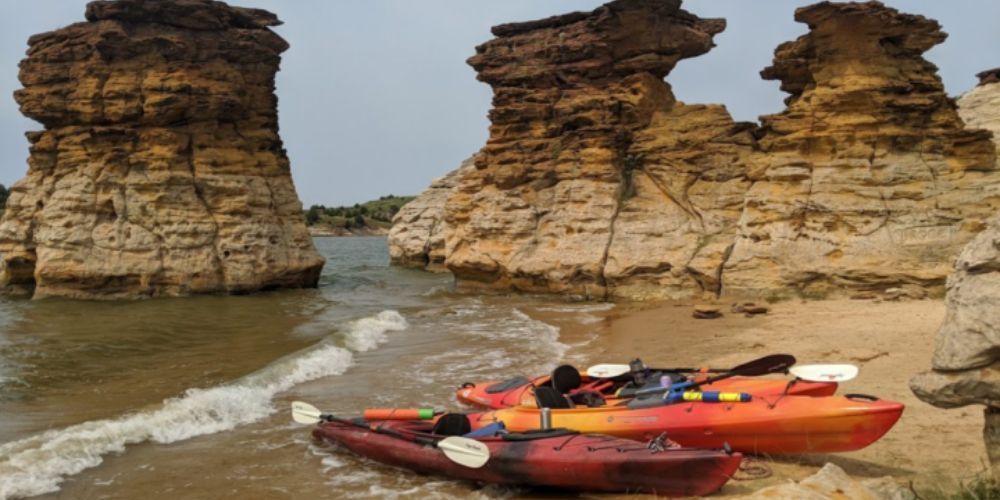
Where to Put Your Kayak In: Kansas Paddling Routes Worth the Drive
Both the Wakarusa River Paddle and the Kansas River route from Eudora to DeSoto are specifically noted as excellent for birding. That's not a small thing. These river corridors attract birds that you won't spot from a car or a hiking trail. Being low on the water and moving quietly is a real advantage.
Kansas sits along the Central Flyway, one of North America's major migratory bird routes. That means depending on when you go, you might share the river with species passing through from as far as the Gulf Coast or the Canadian prairies. Great blue herons are common along these waterways. They tend to stand very still until you're almost on top of them, and then they lift off with a wingspan that genuinely catches you off guard.
If birding is part of your reason for going, bring binoculars you can reach without tipping your kayak. Stash them somewhere dry and accessible. You'll want them ready when something lands in the reeds ten feet off your bow.
The History Moving Under Your Paddle
The Kansas River, locally called the Kaw, runs through territory that has been traveled by water for centuries. The Kaw Nation, for whom the river is named, lived along these banks long before European settlers arrived. Lecompton, one of the put-in points on the Kansas River route, was the capital of the Kansas Territory in the 1850s and the site of significant conflict during the years leading up to the Civil War. You're paddling through land that carries a lot of American history just beneath the surface.
Lawrence, at the other end of that same stretch, was founded in 1854 by anti-slavery settlers and became a focal point of the Bleeding Kansas period. The town was burned in 1863 during Quantrill's Raid, one of the deadliest guerrilla attacks of the Civil War. Floating into Lawrence from the water gives you a quiet arrival into a town with a story most people don't know as well as they should.
That context doesn't have to be heavy. It can just be part of what makes a paddle feel like more than exercise. You're moving through something real.
Gear Tips for Paddling Kansas Rivers and Lakes
Kansas weather can shift fast, especially in spring and early fall. The sun is strong across the open water, and wind on a lake can pick up quickly and make paddling harder than you expected. Start with sun protection you'll actually use: a hat with a brim, SPF clothing or sunscreen you reapply, and sunglasses with polarized lenses so you can see into the water.
For river paddling, a personal flotation device is non-negotiable, and in Kansas it's required by law for every paddler to have one on board. Make sure it fits properly before you get on the water. A PFD that's too loose doesn't do what it's supposed to do. If you're renting, ask the outfitter to help you adjust it.
Dry bags are worth it on moving water. Your phone, snacks, a change of shirt, and anything else you'd be upset to lose should go in one. On the river routes here, you're not doing whitewater, but water still gets in the boat. Plan for it. A waterproof phone case is a small investment that prevents a genuinely bad day.
For longer routes like the 20.5-mile Wakarusa stretch, think about what you're eating and drinking on the water. Bring more water than you think you need. The sun and the physical effort add up faster than they seem to when you're having a good time.
Essential Gear for Kansas

Athmile Women's Barefoot Water Shoes
List of Services
-
Camping in Kansas Find top Kansas camping spots, lakeside sites, gear tips, and permit info. Plan your next outdoor trip with confidence. Start here.Camping in Kansas
-
Cycling in Kansas Discover Kansas's best cycling trails for women and families. Find scenic routes, gear tips, and when to go. Start planning your Kansas ride today.Cycling in Kansas
-
Hiking in Kansas Find the best hiking trails in Kansas for beginners and families. Real trail details, gear tips, and top spots. Start planning your Kansas hike today.Hiking in Kansas
-
Kayaking in Kansas Discover Kansas's best kayaking routes for women, beginners, and families. Find top spots, gear tips, and when to go. Start planning your trip today.Kayaking in Kansas