
Your Guide to Kayaking in Michigan: Where to Go, What to Know, and How to Make It Happen
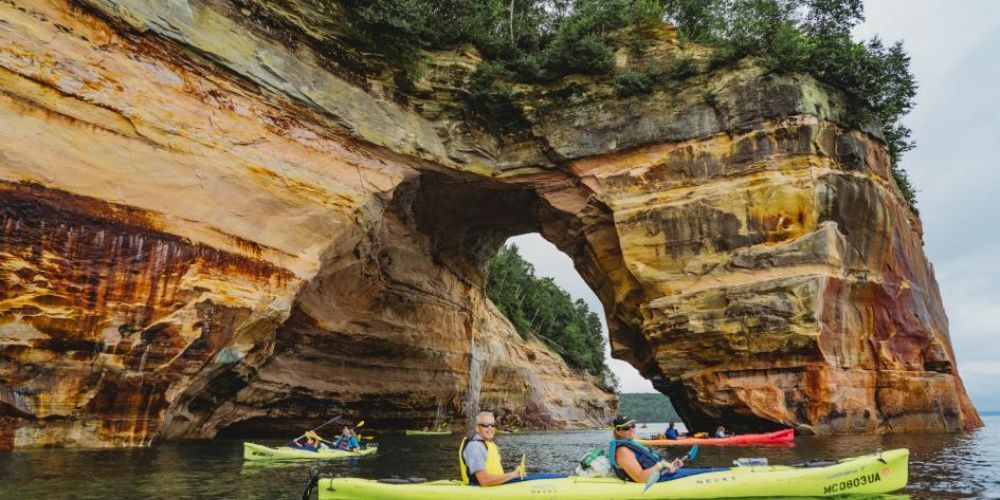
Pictured Rocks National Lakeshore on Lake Superior is the one that stops you cold. The cliffs rise right out of the water in shades of rust, copper, and cream, and a kayak puts you at eye level with all of it. Guided kayaking experiences are available on-site, which makes this a real option even if you've never paddled open water before. It's one of those places that earns every bit of its reputation.
The Two-Hearted River in the Upper Peninsula draws paddlers who want something quieter and more wooded. It's a top destination for a reason. The water moves gently through forests that feel genuinely remote, and the fishing is legendary too. Ernest Hemingway wrote about this river, and you understand why the moment you're on it.
Sleeping Bear Dunes on Lake Michigan offers a completely different feel. The dunes rise dramatically from the shoreline, and paddling along the base of them gives you a perspective no hiking trail can. It's consistently listed among Michigan's best kayaking destinations. Plan ahead for parking and launch access, especially in summer.
Closer to Ann Arbor, the Huron River Kayak Route near Brighton is a 7.6-mile out-and-back trail rated as easy. It's a solid choice for a first trip or a low-key day on the water. AllTrails includes curated maps and reviews for this route, so you can preview it before you go.
Where Michigan Paddlers Keep Coming Back
Michigan gives you both, and they feel nothing alike. Flatwater paddling, the kind you'll find on Lake Mitchell, Lake Cadillac, and the Traverse Bay area, is calm and forgiving. The water is often glassy in the early morning, and you can set your own pace without worrying about current. These spots sit within Michigan state parks, which generally means restroom access, launch areas, and other infrastructure that makes a day trip easier to manage.
Moving water is a different conversation. The Crystal River Paddle Trip allows kayaking, canoeing, and paddleboarding, and it's one of Michigan's top river destinations. River paddling asks you to read the water a little, stay aware of where the current is taking you, and know what's around the next bend. It's not dangerous if you prepare, but it does require more attention than a lake.
The Pere Marquette National Scenic River and the Pine National Scenic River are both permit-required waterways, and both are worth the extra step. On the Pine River, paddlers are encouraged to stay between 9 a.m. and 6 p.m. to keep things peaceful for anglers sharing the water. That's a detail worth writing down before you load the car.
When to Go Kayaking in Michigan
Summer is the clear peak season, and for good reason. The water is warm enough to be forgiving if you tip, the days are long, and the state's lakes and rivers are at their most welcoming. Late June through August gives you the most reliable conditions across most of Michigan's paddling destinations.
Permit timing is worth building your calendar around. On the Pere Marquette National Scenic River, watercraft permits are required from the Friday of Memorial Day Weekend through Labor Day Monday. That window, late May through early September, maps almost exactly to the best paddling weather in the state. Book your permit on recreation.gov before your trip, not the morning of.
If you can manage a shoulder season trip, early June and the week after Labor Day tend to be less crowded. The water is still comfortable, the light is softer, and you'll have more space on popular routes. Michigan in early fall is genuinely something to see from a kayak, even before the leaves peak.
Permits and Planning: What You Need Before You Launch
Two of Michigan's most scenic river paddling routes require permits, and skipping this step means turning around at the put-in. The Pere Marquette National Scenic River requires watercraft permits for all watercraft from Memorial Day Weekend Friday through Labor Day Monday. That includes tubes and stand-up paddleboards, not just kayaks. Permits are available through recreation.gov.
The Pine National Scenic River also has watercraft permits available through recreation.gov. Paddlers on the Pine are encouraged to keep their time on the water between 9 a.m. and 6 p.m. daily. That's not a hard rule, but it's a courtesy worth following to avoid friction with anglers who share the river.
For spots like the Huron River Kayak Route and the Crystal River, check AllTrails for current trail conditions, reviews, and maps before you go. AllTrails lists more than ten popular paddle sports trails in Michigan with driving directions included. Having the map downloaded offline is a habit worth building early.
Getting Started: Michigan's Approach to New Paddlers
Michigan's official tourism site, michigan.org, publishes a beginner's guide to kayaking that's actually useful. It covers the basics without talking down to you: taking a paddling class, learning how to safely enter and exit a kayak, practicing core strokes, and understanding local hazards before you put in. That last point matters more than beginners often expect.
Local hazards vary by water type. On rivers, that means current, submerged logs, and low bridges. On Lake Michigan or Lake Superior, it means weather that can change fast and open water that doesn't forgive overconfidence. Starting on a calm, smaller lake or a mellow river route like the Huron gives you room to build confidence before moving to something bigger.
Guided kayaking is available at Pictured Rocks, which is one of the best ways to experience that destination your first time. Staff are on-site, the routes are managed, and you get to focus on the scenery instead of the logistics. If you're going with a daughter who's newer to paddling, or if you're newer yourself, a guided trip removes a lot of the guesswork.
Essential Gear for Michigan

Athmile Women's Barefoot Water Shoes
Gear Tips for Kayaking in Michigan
Michigan summer means sun, humidity, and water that can still feel cold early in the season, especially on Lake Superior. A personal flotation device is non-negotiable, and it needs to fit correctly. A loose PFD is almost as useless as none at all. Look for one cut for a woman's body so it doesn't gap at the sides or ride up when you're seated.
For footwear, water shoes or sandals with a secure heel strap outperform flip-flops on any Michigan launch. Rocky shorelines and slippery put-ins are common, and you'll want grip and something that stays on your foot when you step into shallow water. Sun protection matters too: a lightweight long-sleeve rashguard protects your arms through a full day on glassy water far better than sunscreen reapplied every hour.
If you're renting a kayak rather than bringing your own, call ahead to confirm what's included. Paddles, PFDs, and dry bags are not always part of the rental. A small dry bag for your phone, keys, and snacks is worth owning regardless. On a river like the Pere Marquette or the Crystal, keeping your gear dry is as much about the river as it is about rain.
List of Services
-
Camping in Michigan Discover Michigan's best campgrounds for women, beginners, and families. Top sites, gear tips, and when to go. Start planning your Michigan camping trip today.Camping in Michigan
-
Cycling in Michigan Discover Michigan's best cycling trails for women and families. Find top routes, gear tips, and when to ride. Start planning your trip today.Cycling in Michigan
-
Hiking in Michigan Discover Michigan's best hiking trails for beginners and families. Top spots, gear tips, and when to go. Start planning your trip today.Hiking in Michigan
-
Kayaking in Michigan Discover Michigan's top kayaking spots, permit tips, and gear advice for beginners and families. Plan your paddle trip today at SportsAndNatureGear.com.Kayaking in Michigan