
Camping in Missouri: Where to Go, What to Know, and Why You'll Want to Stay Longer
Onondaga Cave State Park sits in the Ozarks and draws campers who want something beyond the standard experience. The park is built around a show cave listed on the National Register of Natural Landmarks, and the landscape around it is all rolling hills and clear Meramec River water. Tent camping is available, and the park keeps you close to one of the most unusual geological features in the state.
Johnson's Shut-Ins State Park is one of those places people come back to year after year. The shut-ins are natural rock formations carved by the Black River, and the swimming holes they create are calm, clear, and unlike anything you'll find at a standard lake campground. Tent camping is available here too. Come early in the season if you want a quieter experience.
Roaring River State Park, down in the southwest corner of the state near Cassville, is well-known among anglers for its trout fishing. It also hosts one of Missouri's 12 organized group camps, which makes it a real option if you're planning a larger outing with a school group, scout troop, or a big crew of friends. The valley setting feels peaceful and unhurried even when the park is busy.
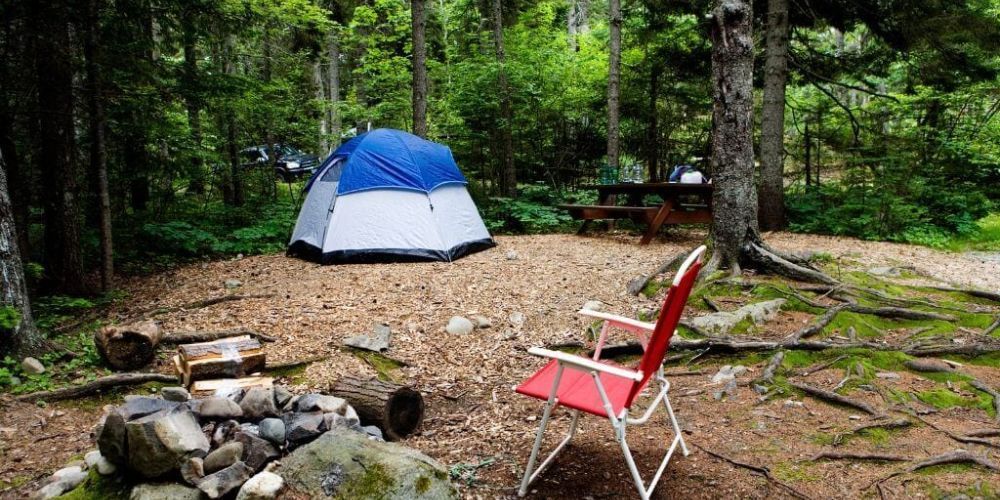
Where Missouri Campers Actually Go
Mark Twain National Forest covers a substantial stretch of Missouri and offers over 750 miles of trails across the landscape. The forest is named for Missouri's most famous literary son, Samuel Clemens, who grew up in Hannibal and whose writing captured the Missouri River country with rare honesty. Hiking, horseback riding, and mountain biking all have room here, and camping throughout the forest lets you base yourself in the middle of it.
The Mina Sauk Falls Trail is rated the most popular camping trail in Missouri on AllTrails, with a 4.6-star rating from more than 3,200 reviews. It's also rated the most difficult, so go in knowing that. The payoff is a waterfall that drops over ancient Precambrian rhyolite rock, and on a clear morning the views from the higher elevation stretch far across the St. Francois Mountains.
If you're new to trail camping and want something more accessible, starting with a state park campground as your base and doing day hikes from there is a smart approach. Missouri's parks give you that flexibility. You don't have to go remote to feel like you're really out there.
Water Access and Lakeside Sites
Table Rock Lake in southwest Missouri has two federal campgrounds worth knowing about. Mill Creek Campground offers 67 reservable campsites along with a group picnic shelter, hot showers, drinking water, and a dump station. Campbell Point Campground has 76 reservable campsites and the same solid set of amenities. Both are managed through Recreation.gov, so booking is straightforward.
Table Rock sits in the Ozark Mountains and the water is clear in a way that surprises a lot of first-time visitors. On calm mornings it goes glassy and reflects the tree line on the far shore. It's the kind of lake that makes you want to sit with your coffee and do nothing for an hour before you do anything else.
Lake of the Ozarks State Park also offers camping and is one of the seven Missouri state parks that host organized group camps. The lake itself is the largest in Missouri and the park surrounds part of its shoreline. If water access matters to your group, this one belongs on your list.
Free Camping and First-Come Sites
Missouri's Department of Conservation manages hundreds of conservation areas across the state, and camping on those lands is free. No fee, no reservation required. Most sites operate on a first-come, first-served basis, which means the trade-off for saving money is a little flexibility on your end.
The MDC advises having a backup plan, and that's genuinely good advice. If you arrive and your preferred spot is taken, you'll want to know your next option before you're standing in a parking lot at dusk trying to think it through. A quick look at the MDC website before you leave will show you which conservation areas are near each other.
For beginners, the free conservation area camping is a low-pressure way to try tent camping without committing to a reserved site. You pack up, you go, and if something doesn't feel right you adjust. That kind of flexibility can make a first trip feel a lot less intimidating.
Group Camps for Bigger Trips
Missouri has 12 organized group camps spread across seven state parks. Those parks are Crowder, Cuivre River, Knob Noster, Lake of the Ozarks, Mark Twain, Roaring River, and a couple of others in the system. If you're coordinating a trip for a larger group, these dedicated facilities are set up for it in a way that regular campsites are not.
Group camps typically have shared gathering spaces and can accommodate numbers that would be impossible to manage across individual sites. For moms planning a troop overnight, a class trip, or even just a big extended family reunion in the woods, this is a route worth exploring. Reservations go through Missouri's official state parks reservation portal.
Mark Twain State Park, which sits on the shores of Mark Twain Lake near the author's hometown of Florida, Missouri, is one of the group camp hosts. There's something grounding about being in that landscape, knowing Clemens grew up a few miles away in a place that looked a lot like this.
Essential Gear for Missouri

Anlisim Merino Wool Hiking Socks, 5 Pairs

Yaktrax Walk Traction Cleats for Snow and Ice

Stanley Perfect Brew Pour Over Set, 12 oz

LifeStraw Personal Water Filter, 3 Pack
Gear Tips for Camping in Missouri
Missouri camping spans a wide range of conditions depending on the season. Spring and fall bring cool nights that drop faster than you'd expect, especially in the Ozarks. A sleeping bag rated for temperatures lower than your forecast is a simple way to sleep well instead of shivering at 3 a.m. Layering matters more here than in states with more consistent overnight temperatures.
Missouri summers are humid, and that changes everything about how you pack. Moisture-wicking fabrics, a good bug net for your tent, and a reliable insect repellent are not optional from late May through September. Ticks are active from spring through fall in wooded areas, so treating your hiking clothes with permethrin before a trip is worth doing.
For the trails, a pair of hiking shoes or trail runners with solid grip handles most of what Missouri throws at you. The Mina Sauk Falls Trail has rocky, uneven terrain that rewards ankle support. For the lake campgrounds at Table Rock, water shoes or sandals with a back strap make moving between camp and the water much easier. Keep a dry bag in your kit if you're planning any water time.
List of Services
-
Camping in Missouri Find Missouri's best camping spots for women, beginners, and families. Top sites, gear tips, and planning advice. Start your Missouri camping trip today.Camping in Missouri
-
Cycling in Missouri Discover Missouri's best cycling trails, from the Katy Trail to the Ozarks. Gear tips, top routes, and when to go. Start planning your ride today.Cycling in Missouri
-
Hiking in Missouri Discover Missouri's best hiking trails for women and families. Find top spots, gear tips, and when to go. Start planning your trip today.Hiking in Missouri
-
Kayaking in Missouri Find Missouri's best kayaking rivers and lakes for beginners and families. Get gear tips, seasonal advice, and top spots. Start planning your paddle trip today.Kayaking in Missouri