
Hiking in Nebraska: Where the Plains Open Up and the Trails Surprise You
Nebraska doesn't have one kind of trail. It has several, and they're genuinely different from each other. Near Omaha and Lincoln, you'll find thick woodlands, shaded paths, and well-maintained recreation areas. Head west and the landscape shifts into open bluffs, high ridges, and grassland terrain that puts the sky front and center.
Outdoor Nebraska describes the range well: rustic dirt hiking paths, wide paved trails, and routes that push into more challenging territory. That variety means a beginner can find a comfortable entry point, and a more experienced hiker can find something that earns its distance. Don't expect the same trail twice in this state.
Pawnee Lake State Recreation Area, for example, offers a 12.8-mile round trip trail rated as strenuous. It's not a casual afternoon loop. Bring plenty of water, sunscreen, and food, and if you're going in winter, pack micro spikes because icy conditions can make footing tricky. That's the kind of practical reality Nebraska trails ask you to prepare for.
The western trails around Scotts Bluff National Monument involve towering bluffs that give you genuine elevation and wide-open views. It's not technical climbing, but it's not flat either. Your legs will know they worked.
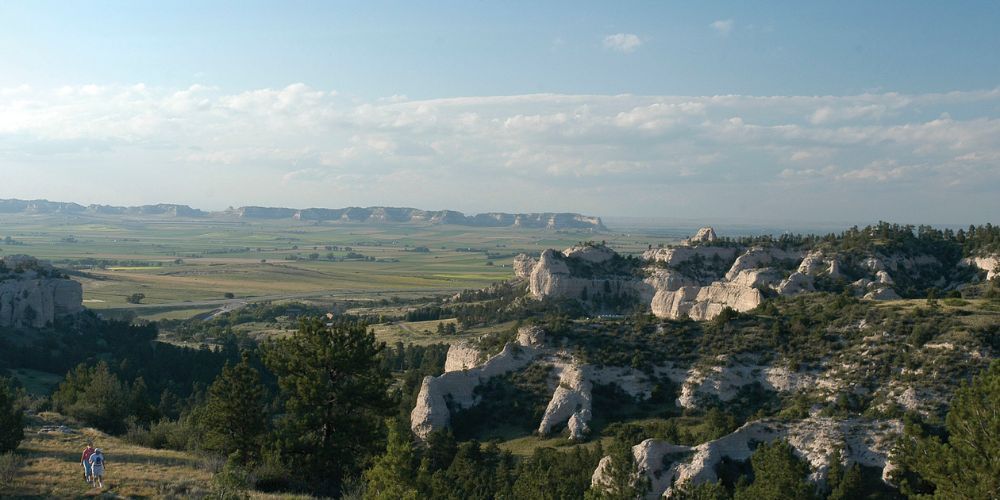
What Nebraska Trails Actually Feel Like: Terrain and Difficulty
If you're just getting started or bringing kids along, Nebraska City is a smart first stop. AllTrails lists 6 easy hiking trails there, with kid-friendly routes and paths that pass historic sights. It's the kind of place where the trail itself becomes part of a bigger conversation about what you're seeing and why it matters.
Schramm Park State Recreation Area is another good choice for a first Nebraska hike. The thick woodlands there make it feel like you've stepped into a different world, especially in spring when everything is green and cool under the canopy. It's a manageable outing that doesn't ask too much but gives you plenty back.
Mahoney State Park and Platte River State Park both show up on Nebraska's list of parks with hiking opportunities, and both are accessible from the Omaha area. They're the kind of places you can visit on a Saturday morning without needing an overnight bag. Trails here tend to be more forgiving in terms of elevation, which makes them good confidence-builders for newer hikers.
For those who want a little more distance without the strenuous rating, the Nebraska National Forest's Bessey trails and the Blackhills Overlook Trail from the Outrider Trailhead are worth exploring. The Black Hills Overlook sits 1.8 miles from the Outrider Trailhead, which is a very doable out-and-back for most fitness levels.
Cultural and Historic Connections Along Nebraska Trails
Homestead National Historical Park sits 4 miles west of Beatrice on State Highway 4, and it's one of the more quietly powerful places you can walk in this state. The park marks the site of one of the first claims under the Homestead Act of 1862, the federal law that opened the Great Plains to settlers and reshaped the country. Hiking here is also wildlife viewing and a real encounter with that history.
Near Chimney Rock and Scotts Bluff National Monument in western Nebraska, you're walking land that the Oregon, California, and Mormon Trails all crossed. Hundreds of thousands of people passed these landmarks in the 1800s, using the bluffs as navigation points across the open plains. Standing at the base of Scotts Bluff and looking up at those towering ridgelines, that history doesn't feel distant.
Nebraska City's trails with historic sights add another layer to an easy family hike. It's the kind of detail that turns a nature walk into something your daughter remembers later. History and movement together make for a fuller day.
Fort Robinson State Park carries its own weight historically as a former U.S. Army post in the Nebraska Panhandle. It's listed among the state's parks with hiking opportunities, and the landscape there reflects the rugged western terrain that made it strategically important for over a century.
When to Go Hiking in Nebraska
Spring is the sweet spot for Nebraska hiking, especially in the Nebraska National Forest. Trails like the Blackhills Overlook Trail, Soldier Creek Loop, Scott Lookout National Recreation Trail, and the Bessey trails are particularly popular once temperatures climb and the land starts to wake up. The light is softer, the wildflowers come through, and the air hasn't turned heavy yet.
Summer works, but go early. Nebraska summers are warm and open, and most trails don't offer consistent shade the way mountain forests do. If you're hitting a strenuous route like Pawnee Lake, starting before 8 a.m. makes a real difference. Sunscreen and plenty of water aren't optional in July.
Fall brings cooler temperatures and color in the wooded eastern areas. If you're hiking near Schramm Park or around the Platte River corridor, late September through October can be genuinely beautiful without the summer heat. It's a good season for longer days on the trail without paying for it afterward.
Winter hiking is possible but asks for preparation. Pawnee Lake's trail can get icy enough to need micro spikes, and that's a good reminder that Nebraska winter weather moves fast. Check trail conditions before you go, dress in layers, and let someone know your plan.
Wildlife and Nature Worth Watching For
Wildlife viewing is listed as an activity at Homestead National Historical Park, and it's a natural pairing with a hike through open grassland. The park's mix of restored tallgrass prairie and woodland edges draws a range of bird species, and you're likely to spot something worth stopping for if you're patient and quiet.
From the Outrider Trailhead in the Nebraska National Forests, the Chadron Creek Wildlife Area sits 6.9 miles in. It's a longer push, but the corridor between the trailhead and the wildlife area moves through varied terrain that supports a range of species. If you're the kind of person who hikes slowly and looks at things, this route rewards that pace.
The Platte River valley is one of North America's most significant migratory bird corridors, and hiking near Platte River State Park puts you close to that energy. Spring migration, especially, draws sandhill cranes in numbers that are hard to fully describe. It's one of those things you need to see to understand why people come back for it every year.
Essential Gear for Nebraska

The North Face Borealis Commuter Backpack

LifeStraw Personal Water Filter, 3 Pack

Osprey Ultralight Collapsible Stuff Pack 18L
Gear Tips for Hiking in Nebraska
Nebraska's biggest gear consideration isn't technical difficulty. It's sun exposure and heat management. The terrain in much of the state is open, the sky is wide, and there's often less shade than hikers expect. A lightweight, long-sleeve sun shirt matters more here than it would on a shaded mountain trail. A good hat with a brim, quality sunscreen, and a hydration pack or extra water are the three things that make or break a Nebraska summer hike.
For footwear, a trail runner or light hiking shoe handles most Nebraska trails well. You don't need heavy boots for the eastern woodlands or paved recreation area paths. Save the sturdier boot for western routes with rocky terrain near Scotts Bluff or for winter conditions at places like Pawnee Lake, where micro spikes can be a real safety tool on icy stretches.
Layer thoughtfully for spring and fall. Nebraska weather shifts quickly, and a trail that starts at 55 degrees can feel very different by midday. A packable wind layer and moisture-wicking base layer give you flexibility without adding bulk to your pack. If you're bringing a daughter along, that same principle applies to her kit.
A basic first aid kit, a charged phone with the AllTrails app downloaded offline, and a printed trail map for remote western routes round out a practical Nebraska hiking setup. Cell coverage in the Panhandle and National Forest areas can be spotty. Don't rely on signal alone.
List of Services
-
Camping in Nebraska Find Nebraska's best campgrounds for women, beginners, and families. Top sites, gear tips, and when to go. Start planning your trip today.Camping in Nebraska
-
Cycling in Nebraska Discover Nebraska's top cycling routes, rail trails, and park paths for women and families. Find gear tips and when to go. Start planning your ride today.Cycling in Nebraska
-
Hiking in Nebraska Discover Nebraska's best hiking trails for women, beginners, and families. Get real tips on where to go and when. Start planning your trip today.Hiking in Nebraska
-
Kayaking in Nebraska Discover Nebraska's best kayaking spots, gear tips, and when to go. Plan a real trip on 518 miles of water trails. Start exploring today.Kayaking in Nebraska