
Kayaking in Nebraska: Rivers, Lakes, and Water Trails Worth Paddling
The Niobrara National Scenic River is the place most folks hear about first, and for good reason. Beginners can float it comfortably by kayak, canoe, or tube, and the scenery along the water earns every mile. It's also a solid choice if you're bringing a daughter who's never paddled before. The water moves steadily but doesn't demand much technical skill, so you can spend more time looking up at the bluffs than worrying about your line.
Lake McConaughy draws kayak anglers who want open water and room to roam. It's Nebraska's largest reservoir, and on a calm morning the surface can look like glass. Lewis and Clark Lake, near the Cottonwood area, is another spot families return to, popular for both kayaking and fishing from a kayak. The water is typically calm, the setting is comfortable, and it's the kind of place where an afternoon on the water doesn't feel rushed.
Calamus Reservoir and Harlan County Reservoir are worth knowing if you're heading into the central or southern part of the state. Both are listed as strong kayak fishing destinations, and both offer that wide-open Nebraska sky that makes even a quiet paddle feel like a full day out. Carter Lake, an oxbow lake of the Missouri River just outside Omaha, sits in a quirky geographic spot where the state border between Iowa and Nebraska runs through water. It's close, it's calm, and it's worth an afternoon.
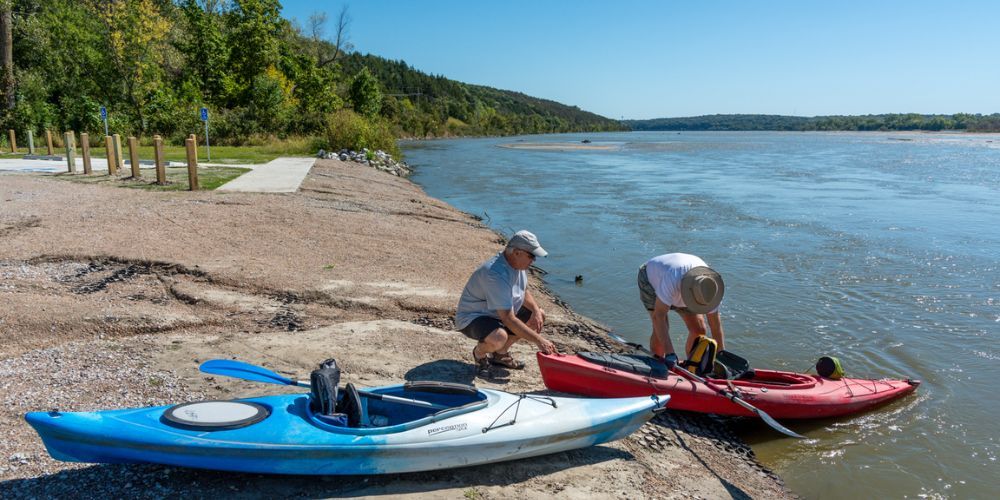
Where Nebraska Women Are Actually Paddling
Nebraska's water options split pretty cleanly between flowing rivers and open lakes. The rivers move, have personality, and reward paddlers who want a little more from their trip. The lakes give you freedom to go at your own pace, turn around when you want, and let a beginner find her footing without pressure.
The Dismal River is one of Nebraska's 10 designated water trails and lives up to its name if you're not prepared. Its curves are genuinely challenging, and it's not where you want to start if you've never paddled moving water. The Bridgeport to Broadwater paddle route is a 16.8-mile point-to-point trip that is also considered a challenging route. Both are rewarding for paddlers who've put in some time on the water. Save them for once you're comfortable reading current.
For a first trip with a daughter or a friend who's newer to paddling, flatwater is your friend. Merritt Reservoir State Recreation Area, Rock Creek Lake State Recreation Area, and Overland Trail Recreation Area are all listed kayaking and canoeing destinations in Nebraska. They offer the kind of unhurried water where you can focus on the experience, not just surviving it.
When to Go Kayaking in Nebraska
Summer is the clear answer in Nebraska, particularly June through August. The weather is most reliable, the water is warmest, and the days are long enough to fit in a paddle and still have evening to spare. This holds especially true in the Nebraska Sandhills region, where local outfitters describe summer as the season that brings everything together.
Spring can offer beautiful conditions, but water levels on rivers can be unpredictable after snowmelt. Fall brings cooler air and less crowd traffic, which some paddlers love. If you're going in shoulder seasons, check conditions locally before you commit to a moving water route. The Niobrara tends to be most enjoyable when summer flows are steady and the weather cooperates.
Planning a trip for a specific weekend? Mid-June through late July tends to be the sweet spot across most of the state. Rental outfitters like Niobrara Adventures LLC, Platte River Rentals, and Missouri River Tours are active during the summer season, so you won't be hunting for a boat if you book ahead.
Wildlife and Nature Along Nebraska's Waterways
Crescent Lake National Wildlife Refuge sits inside the largest continuous sand dune area in the United States, right in Nebraska's panhandle. Kayaking there puts you in one of the quieter, more remote corners of the country. Wildlife viewing is part of the draw, and the landscape alone, all dunes and sky, is unlike anything you'd expect from a paddling destination.
The Niobrara National Scenic River is equally rich. The corridor supports a mix of ecosystems, and wildlife sightings on the water aren't unusual. Deer, birds, and the occasional great blue heron are part of a typical float. It's the kind of place where you'll want to paddle slowly and keep your eyes up.
Not every Nebraska paddle is a wildlife safari, but the state's rivers and lakes sit within a landscape that still has real wildness to it. Bring binoculars if you have them. Leave the earbuds at home.
The History Behind Nebraska's Paddling Culture
Nebraska has 10 designated water trails covering approximately 518 miles, managed by the Nebraska Game and Parks Commission. That's not an accident. The state has a long relationship with its waterways, from Indigenous peoples who traveled and fished these rivers for centuries to the explorers and settlers who followed the Missouri and Platte westward. The trails program formalizes what Nebraskans have known for generations: these rivers are worth protecting and using.
The Lewis and Clark Expedition traveled the Missouri River along Nebraska's eastern edge in the early 1800s. Lewis and Clark Lake carries that name directly, and paddling its water still feels like following something larger than a day trip. That history doesn't feel distant when you're on the water. It feels like context.
The Niobrara was designated a National Scenic River in 1991, a recognition of its ecological and cultural value. The designation helped preserve the corridor and brought more managed recreation to the area. Today it's one of the most-visited paddling rivers in the Great Plains.
Essential Gear for Nebraska

Athmile Women's Barefoot Water Shoes for Kayaking
Gear Tips for Kayaking in Nebraska
Nebraska summers are warm and sunny, and open water reflects that sun back at you all day. Start with a lightweight, moisture-wicking top and water-resistant bottoms you don't mind getting wet. Sun protection matters more than most people expect on the water. A wide-brimmed hat and SPF 50 sunscreen should be non-negotiable, even on cloudy days.
For flatwater paddling on lakes and reservoirs, a recreational kayak is the right tool. It's stable, forgiving, and easy to control if you're newer to paddling. If you're taking a river like the Niobrara, ask the outfitter what they recommend for that day's conditions. Many of the local providers, including Niobrara Adventures, Platte River Rentals, and Back Alley Bicycles and Outfitters, can set you up with the right gear for the route.
Bring a dry bag for your phone, snacks, and anything you'd be sad to lose to the water. A reusable water bottle is essential on summer paddles, since dehydration sneaks up on you when you're out in open sun. If you're paddling with a child, a properly fitted personal flotation device is required and should be worn the entire time on the water, not just clipped to the boat.
List of Services
-
Camping in Nebraska Find Nebraska's best campgrounds for women, beginners, and families. Top sites, gear tips, and when to go. Start planning your trip today.Camping in Nebraska
-
Cycling in Nebraska Discover Nebraska's top cycling routes, rail trails, and park paths for women and families. Find gear tips and when to go. Start planning your ride today.Cycling in Nebraska
-
Hiking in Nebraska Discover Nebraska's best hiking trails for women, beginners, and families. Get real tips on where to go and when. Start planning your trip today.Hiking in Nebraska
-
Kayaking in Nebraska Discover Nebraska's best kayaking spots, gear tips, and when to go. Plan a real trip on 518 miles of water trails. Start exploring today.Kayaking in Nebraska