
Cycling in Minnesota: Rail Trails, River Routes, and Rides Worth the Drive
Some of Minnesota's best cycling exists because of its industrial past. The Mesabi Trail, Paul Bunyan Trail, Heartland Trail, and Willard Munger Trail all follow former railroad corridors that have been converted to paved paths, part of a broader national rails-to-trails movement that transformed abandoned rail lines into public greenways. That history gives these routes a particular character: long, straight stretches through forest and farmland, with a gentle grade that makes them genuinely accessible for casual riders and kids.
The Paul Bunyan Trail and Heartland Trail run through north-central Minnesota lake country, where the scenery shifts from small towns to pine stands to open water. The Mesabi Trail cuts through the Iron Range, a region shaped by iron ore mining that once fueled American industry. The Willard Munger Trail connects Duluth to the St. Croix State Park area, offering a long-distance option for those who want more miles underfoot.
All four trails appear together on a 6-day guided rail trails bike tour operated through Discovery Bicycle Tours, which is worth knowing if you'd rather have logistics handled for you. It's a real option for a group trip with friends, and it takes the guesswork out of planning across multiple trail systems.
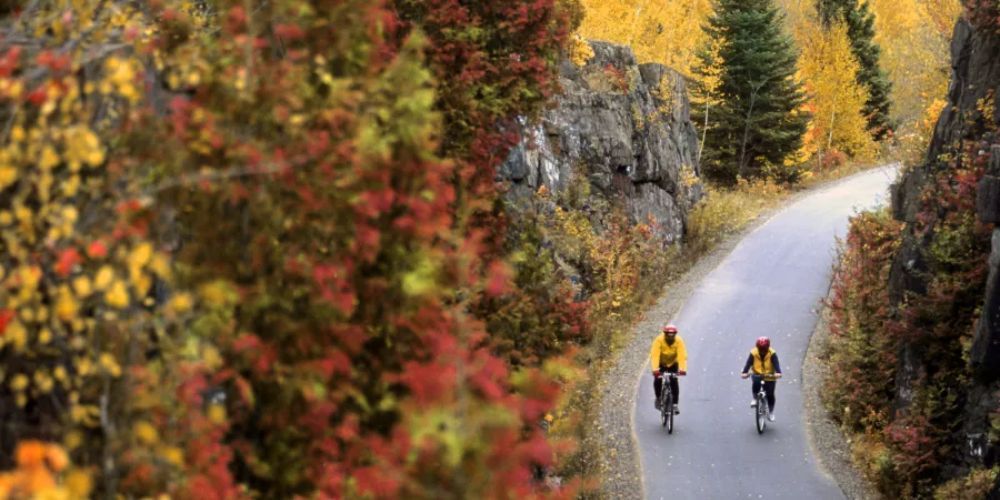
Rail Trails Worth Knowing: Minnesota's Converted Corridors
The Twin Cities cycling network is one of the most extensive urban trail systems in the country, and the 51-mile paved off-street route through Minneapolis is the centerpiece of it. The route moves through downtown, follows the Mississippi Riverfront, and winds through the Chain of Lakes area, which gives you both the energy of the city and stretches of trail that feel genuinely calm and away from traffic.
The Chain of Lakes section is where most people slow down. The water is usually calm enough to look like glass on a still morning, and the paths around the lakes are wide and well-traveled without feeling crowded. It's the kind of ride where you stop more than you plan to. BikeMN maintains detailed trail maps for the Twin Cities region, Southern, Central, and Northern Minnesota, and their resources are a practical starting point before any ride.
For anyone new to city riding, the off-street infrastructure here removes most of the intimidation. You're not navigating traffic. You're on a dedicated path that connects neighborhoods, parks, and water in a way that actually makes sense.
The North Shore by Bike: Gitchi-Gami State Trail
If you've driven Highway 61 along Lake Superior's North Shore, you already know what the landscape looks like from a car window. The Gitchi-Gami State Trail gives you the same view at a pace where you can actually take it in. It's consistently described as one of the best ways to experience Minnesota's North Shore by bike, connecting the area's top attractions along the lake.
The North Shore is a different Minnesota than the lake country of the interior. The scale shifts. Lake Superior is the largest freshwater lake in the world by surface area, and riding alongside it, even in segments, gives you a sense of that. The trail is paved and designed to connect towns and points of interest along the shore, making it a logical route for a day trip or a longer stay.
For a first trip to this part of the state, the Gitchi-Gami Trail is the most direct way to see what the North Shore is actually about. It earns the recommendation.
A Quiet Ride Worth Knowing: Glendalough State Park
Glendalough State Park doesn't always show up on the short lists, but it's worth your attention. The park has a paved bike trail that connects to the longer Glendalough trail, which leads into the town of Battle Lake. That connection makes it more than a loop around a parking area. You can ride into town, stop for something to eat, and ride back.
The park itself sits in west-central Minnesota, in an area of rolling terrain and small lakes. It's a quieter option than the major rail trails, which makes it appealing if you're looking for something more unhurried. It also works well as a family ride because the paved trail keeps things manageable for younger or less experienced riders.
For the Minnesota DNR, trails like Glendalough that follow gentler terrain and connect to nearby towns represent exactly what they recommend for kid-friendly paved cycling. It's a practical choice that also happens to be peaceful.
Gear Tips for Cycling in Minnesota
Minnesota's cycling season runs roughly from late April through October, and the conditions within that window vary more than people expect. Early and late season mornings can be genuinely cold, even when the afternoon is comfortable. Layering matters here in a way it doesn't in warmer states. A lightweight wind jacket that packs into a jersey pocket has saved more than a few rides on the North Shore, where lake breezes come off the water without warning.
For the paved rail trails and urban routes, a hybrid or comfort bike is the right call. You don't need a road bike for the Heartland Trail or the Chain of Lakes loop. A bike that puts you in an upright position will keep you comfortable over longer distances and give you a better view of the scenery. If you're renting, most Minnesota rental operations now offer e-bikes alongside standard options, and helmets are included with all rentals.
Padded shorts are worth it, even for shorter rides. The rail trails are smooth, but you're still in the saddle for a while if you're covering real distance. Sun protection matters more than most people plan for on open trail sections through farm country, where there's little canopy cover. Sunscreen, sunglasses, and a cap under your helmet are practical choices, not extras.
Essential Gear for Minnesota
List of Services
-
Camping in Minnesota Find the best camping in Minnesota for women, beginners, and families. Top parks, booking tips, and gear advice. Start planning your trip today.Camping in Minnesota
-
Cycling in Minnesota Discover Minnesota's best cycling trails for women, beginners, and families. Find top routes, gear tips, and when to go. Start planning your ride today.Cycling in Minnesota
-
Hiking in Minnesota Discover Minnesota's best hiking trails for women and families. Find top spots, gear tips, and when to go. Start planning your trip today.Hiking in Minnesota
-
Kayaking in Minnesota Discover Minnesota's best kayaking spots for women, beginners, and families. Find top sites, gear tips, and when to go. Start planning your trip today.Kayaking in Minnesota